MRCP PACES Station 2: Mastering the Palpitations History
Few Station 2 presentations expose a candidate's true clinical ability as quickly as palpitations. The scenario looks deceptively simple — everyone knows the differential — yet it consistently separates candidates into two groups. The strong candidate emerges from 8 minutes having narrowed a 20-item differential into 3, elicited the hidden red flags, and addressed a frightened patient's real fear. The weak candidate fires off 40 unstructured questions, never asks about syncope, and labels a young woman with 'anxiety' before discovering her father died suddenly at 36.
This guide dissects the palpitations station the way examiners think about it — with the exact questions, the classic patterns, the traps, and the 10-minute discussion strategy that converts a safe pass into a comfortable one.
Why Examiners Love Palpitations
Palpitations earns its place on so many circuits because it tests everything Station 2 exists to assess:
A differential that crosses systems — cardiology, endocrinology, haematology, psychiatry and pharmacology in one consultation
Risk stratification — distinguishing a terrified but healthy 24-year-old from genuine VT, HOCM or long QT
Communication depth — anxiety, health-related fear and ICE territory are woven into the scenario by design
Pattern recognition — one or two well-aimed questions ('tap out the rhythm for me') can collapse a long differential instantly
Know What Station 2 Actually Rewards
In the current PACES format, each station runs to 20 minutes: 8 minutes with the patient, then 2 minutes to gather your thoughts, then 10 minutes of discussion with the examiners. You are scored on your structured clinical communication, your ability to construct a sensible differential, your clinical judgement around investigations and management, and how you handle the patient's concerns and welfare.
That means Station 2 is a consultation, not an interrogation. Gathering facts is only half the job — organising them and using them is where the marks live.
The Opening Minute: Set the Tone
A strong opening buys you cooperation for the next seven minutes:
'I'm sorry to hear you've been having these episodes — they sound frightening. Can I start by asking you to describe exactly what you notice when it happens?'
Then screen the field:
'Since these started, has anything else been going on with your health?'
And signpost your structure:
'I'll ask a few questions about the episodes themselves first, then about your general health and family, and then we'll come back to anything that's been worrying you. Is that alright?'
Signposting demonstrates organisation, puts the patient at ease, and reminds you where you are going.
The Seven Questions That Decode the Rhythm
This sequence is the heart of the station. Practise it until it is reflex.
What does it feel like? — 'fluttering', 'pounding', 'like my heart skips a beat', 'like it's racing'
Can you tap out the rhythm on my hand? — the single highest-yield manoeuvre of the entire station. Regular vs irregular, fast vs normal rate, in ten seconds.
How does it start? — sudden ('like a switch') suggests re-entry tachycardia or AF; gradual build-up suggests sinus tachycardia from anxiety, pain, thyroid or fever
How does it stop? — sudden termination again points to AVNRT/AVRT; a gradual fade to sinus tachycardia
How fast does it go? — 'too fast to count' (180–200) is the tachyarrhythmia range
How long, and how often? — this single answer later dictates your monitoring strategy in the examiner discussion
What brings it on and what settles it? — exercise, stress, cold drinks (classic SVT trigger), standing quickly, alcohol, and whether breath-holding or straining ever terminates an episode
The polyuria clue. After an SVT terminates, atrial stretch releases ANP and the patient rushes to pass urine. Examiners consistently reward candidates who ask about it — it is a genuine consultant-level detail.
Pattern Recognition Table
| What the patient says | What you should be thinking |
|---|---|
| 'Starts like a switch, races too fast to count, stops suddenly when I strain — then I need the toilet urgently' | AVNRT / AVRT (ask about pre-excitation; consider WPW) |
| 'My heartbeat feels completely chaotic' in a 70-year-old who is breathless | Atrial fibrillation |
| 'It skips, then a big thump — usually at rest, disappears when I walk' | Ventricular ectopics — usually benign |
| 'My heart pounds at night but the rate feels normal' | Heightened awareness; hyperdynamic states — anaemia, thyrotoxicosis, anxiety |
| Regular rate around 150 in an older patient | Atrial flutter with 2:1 conduction — look for sawtooth waves |
| Exertional palpitations with chest pain or syncope in a young athlete, family history of sudden death | HOCM or exercise-induced VT — your must-not-miss |
| Episodic pounding with splitting headache, drenching sweats and pallor | Phaeochromocytoma — rare, but a PACES favourite |
| New missed beats or a collapse after starting an antipsychotic, macrolide or antiemetic | Acquired long QT with torsades de pointes |
Hunt the Red Flags Before Anything Else
Ask these directly — do not wait for them to surface:
Syncope during palpitations — treat as ventricular tachycardia until proven otherwise
Chest pain or breathlessness during episodes
Family history of sudden death under 40 — ask it verbatim: 'Has anyone in your family died suddenly or unexpectedly at a young age — under 40 — including drownings or unexplained car accidents?'
Known structural heart disease — previous MI, heart failure, valve disease
Recent new medications or dose changes before the episodes began
The Systemic Sweep
Work through the non-cardiac causes deliberately:
Thyroid: weight loss, tremor, heat intolerance, sweating, loose stools, eye symptoms, oligomenorrhoea
Anaemia: fatigue, pallor, menorrhagia — and ask about melaena and rectal bleeding; iron-deficiency anaemia in a 60-year-old is a two-organ story
Menopause: flushing, night sweats, irregular periods in the right age group
Panic features: tingling fingers, sense of doom, prior episodes, major life stressors — noted, but never concluded early
Substances: caffeine (coffee, energy drinks, pre-workout powders), alcohol ('holiday heart'), nicotine, cocaine and amphetamines, over-the-counter decongestants, weight-loss supplements
Prescribed drugs: salbutamol, levothyroxine (was the dose recently increased?), and QT-prolonging agents — citalopram, haloperidol, clarithromycin, ondansetron, domperidone
Ask about drugs non-judgementally: 'Some supplements and recreational drugs can cause this — is there anything you might be taking that you'd rather not put on a form? We can still discuss it confidentially.'
Family History, Function and Safety
Cover ischaemic risk factors (smoking, diabetes, hypertension, cholesterol), previous arrhythmia admissions, and whether the patient still has any old ECGs — real patients in PACES are established diagnoses, and surrogates are primed with this detail. Then ask what a safe registrar always asks: do these episodes affect driving (especially HGV or PS licences), working at heights, or swimming? This is where welfare marks and DVLA awareness quietly live.
ICE: The Marks Left on the Table Every Single Diet
Ideas: 'Do you have any thoughts about what might be causing this?'
Concerns: 'Is there anything you're specifically worried these episodes might mean?' — the answer is very often 'my father died of a heart attack at 45'
Expectations: 'What were you hoping we could do about it today?'
Then address each one explicitly before you leave. Naming the fear — 'You've been worried this might be what happened to your father; that's completely understandable, and here is how we'll find out' — converts a good station into an excellent one.
The Closing Minute
Summarise in two or three sentences and check you have it right
State your provisional plan in patient language
Safety-net: 'If you feel faint, get chest pain, or an episode will not settle — call 999'
Thank the patient
Facing the Examiners: Winning the 10-Minute Discussion
When asked for your differential, never produce a flat list. Use this hierarchy:
'My leading diagnosis is AVNRT because of the sudden on-off fast regular rhythm, her age, and termination with straining. Important alternatives are anxiety-related sinus tachycardia and thyrotoxicosis. The diagnosis I must not miss is an arrhythmia on a substrate of structural disease, because of the exertional symptoms and her family history of sudden cardiac death — so I would specifically exclude HOCM and pre-excitation.'
Investigations — present them as a logical ladder:
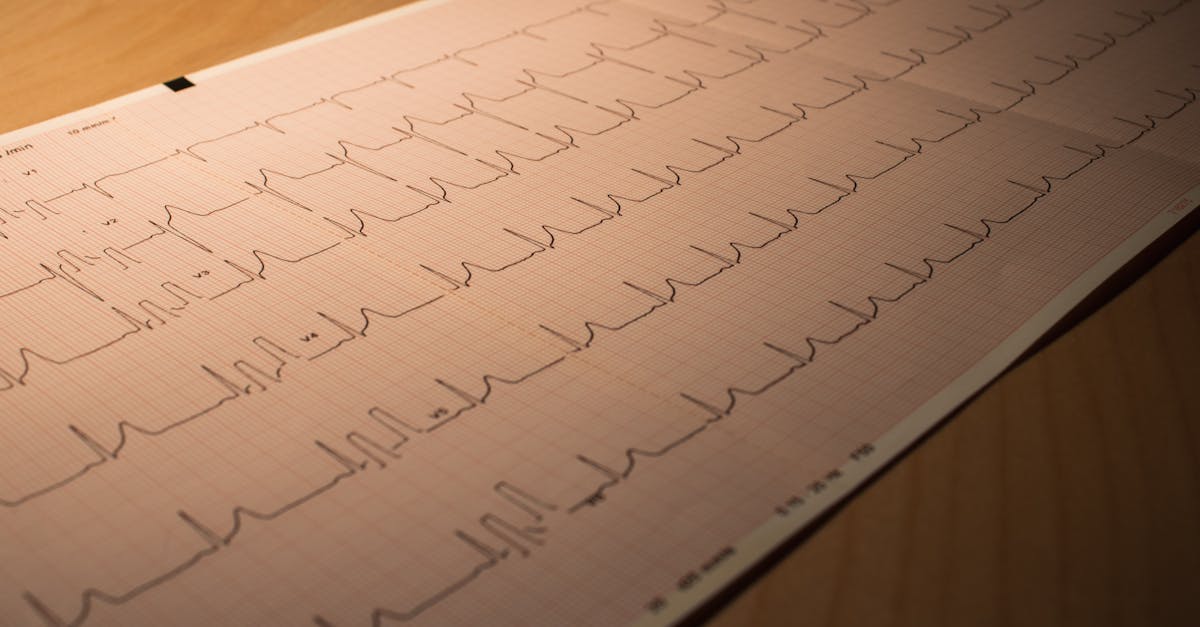
Bedside: 12-lead ECG today — looking for AF, pre-excitation (delta wave, short PR), long QT, ischaemia, HOCM changes; lying and standing BP if postural symptoms
Bloods: FBC, U&E, LFTs, TFTs, glucose or HbA1c, magnesium and calcium; urine metanephrines only if the phaeochromocytoma phenotype is genuinely present
Rhythm monitoring matched to frequency: daily episodes → 24-hour Holter; weekly → 7-day patch; monthly → 14–30-day event recorder; rare episodes with syncope → discuss an implantable loop recorder with cardiology
Echocardiogram if the ECG is abnormal, there are signs of structural disease, or the family history demands it
Supervised exercise testing in selected exertional cases, with cardiology involvement
When asked about management, match the diagnosis and show judgement:
Benign ectopics: reassurance plus stimulant reduction — say the word 'reassure' with a plan, never as a discharge
SVT: acute vagal manoeuvres then IV adenosine (warn about transient chest tightness; avoid in severe asthma); definitive treatment is electrophysiology study with catheter ablation, which is curative in the great majority of AVNRT cases
AF: answer the three questions — rate versus rhythm control, anticoagulation using CHA2DS2-VASc and bleeding risk, and treatment of precipitants
Secondary causes: treat the thyroid, investigate and correct the anaemia, and review the culprit drug with its prescriber rather than stopping it unilaterally where a mental health prescription is involved
Anxiety: only as a positive diagnosis after exclusion — psychoeducation, CBT referral, GP follow-up
HOCM or VT territory: urgent cardiology referral, advice to pause competitive sport pending review, and DVLA notification if there has been syncope with driving relevance
Finish every management answer with the trio examiners wait to hear: involve the patient, document clearly, and safety-net.
The Ten Mistakes Examiners See Every Diet
Never asking the patient to tap out the rhythm
A 25-question interrogation with no signposting or empathy
Forgetting syncope — the single most important associated symptom
Family history of sudden cardiac death never explored
Missing the drug list — levothyroxine, salbutamol, QT-prolongers, 'supplements'
Diagnosing 'anxiety' in the first two minutes and switching off clinically
A flat 15-diagnosis list with no hierarchy in the examiner discussion
Ambulatory monitoring chosen randomly — a 24-hour Holter for monthly episodes
Failing to address the patient's stated concern before leaving the room
No safety-netting at the close
Three Classic Trap Variants
Trap 1 — The reassurance trap. A young, articulate, visibly anxious woman with pounding palpitations and a normal rate. Except her uncle died suddenly at 32 while swimming. Close this as 'panic attacks' and you have failed the clinical judgement of the station. The scenario wants exertional symptoms, syncope, HOCM exploration, echocardiography, family screening and genetic counselling on your differential.
Trap 2 — The hidden prescription. A 58-year-old with palpitations and two recent syncopal episodes, recently started on citalopram by the GP and given a course of clarithromycin. The unlock is one question: 'Has any new medication been started, or any dose changed recently?'
Trap 3 — Not everything racing is the heart. Palpitations, breathlessness and tiredness in a 62-year-old with 'a bit of indigestion'. This is iron-deficiency anaemia from colorectal malignancy, and the station is testing whether you chase anaemia and GI symptoms through to a safe, conclusive plan.
Your 60-Second Revision Card
| Element | The must-do items |
|---|---|
| Character | Tap the rhythm — fast? regular? sudden on and off? |
| Red flags | Syncope, chest pain, family history of sudden death under 40 |
| Systemic | Thyroid, anaemia (and its GI source), menopause, panic features |
| Drugs | Caffeine, alcohol, cocaine, salbutamol, levothyroxine, QT-prolongers |
| ICE | Ideas, concerns, expectations — each addressed out loud |
| Investigations | ECG → bloods → symptom-matched monitor → echo |
| Management | Diagnose, treat the cause, risk-stratify, reassure safely, refer, safety-net |
Make the Practice Stick
Run full 8-minute timed consultations, not half-length question drills — pacing collapses under exam pressure if you have never rehearsed it
Rotate the phenotype: SVT, AF, ectopics, thyrotoxicosis, HOCM trap, anaemia trap — so no variant surprises you
Record yourself and listen specifically for signposting, summarising and interruption-free listening
Rehearse the examiner discussion out loud until you can deliver your differential hierarchy in three sentences
Mix timed mock circuits or AI patient practice between sessions with study partners to reproduce real time pressure and unpredictability
Final Word
The palpitations station is not won by knowing more diagnoses than the next candidate — it is won by asking better questions in a better order, and then thinking out loud like the registrar you already are. Examiners can tell the difference within ninety seconds. Now, so can you.
Join the Discussion
Share your thoughts and insights with the medical community
Comments
Delete Comment
Are you sure you want to delete this comment? This action cannot be undone.